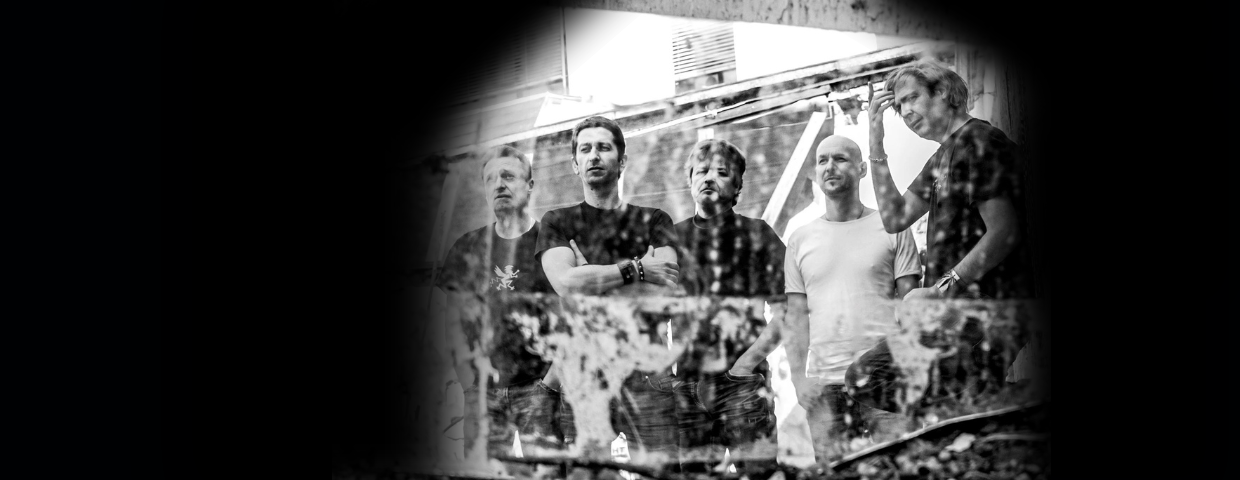
The Slovenian punk band Niet was formed at the end of 1983. They quickly established themselves as one of the leading acts of the then-vibrant Ljubljana hardcore scene, soon taking a unique path that set them apart from other bands. In April 1984, Niet recorded their first hit, "Depresija", in the studio of their long-time producer Borut Činč (formerly of Buldožer). This was followed by two more hits in the summer, "Perspektive" and "Ritem človeštva". After a victorious performance at the largest Slovenian rock festival at the time, Novi Rock, Niet became one of the major names on the Slovenian music scene. In September 1984, their legendary cassette *Srečna mladina* was released in only 200 copies, later becoming the most frequently copied cassette in Slovenian music history. At the end of that year, they recorded "Lep dan za smrt", which became their biggest hit.
In early 1985, the band went on tour in France and returned again for two shows in Paris. Domestically, they performed at many festivals alongside the biggest names of the Yugoslav rock scene and shared the stage with major international punk acts. They also performed solo concerts in Sarajevo, Zagreb, Trieste, and across Dalmatia. That spring, Niet were selected for the finals of Yurm, the biggest festival of young Yugoslav bands at the time, held in Zagreb, and returned to Novi Rock in September — this time as featured guests. Two major hits from 1985 were "Vijolice" and "Februar". In March 1986, after three shows in Belgrade and a farewell concert in Ljubljana with Paraf, the band temporarily disbanded due to members leaving for military service (JLA). They briefly reunited in 1988, recording their last tracks with singer Primož Habič.
In May 1991, Primož passed away due to a heroin overdose. After his death, a wave of “Nietomania” spread among Slovenian youth. During this period, two studio albums and one live album were released posthumously, along with a new major hit, “Ruski vohun”. In 1998, a tribute album featuring 23 different Slovenian bands (including Srečna mladina — named after Niet’s first cassette — Ana Pupedan, Racija, Zaklonišče prepeva, Rambo Amadeus, Zablujena generacija, Psycho-path, and others) was released, with each band covering one of Niet’s 23 previously released songs. This event was crowned with a three-day tribute concert at Ljubljana’s main alternative venue, Metelkova.
Just when it seemed that Niet would never return to the stage, they made a comeback in early 2008 with a new singer, Borut Marolt (formerly of Prisluhnimo tišini). With nearly the original lineup — Igor Dernovšek (guitar), Aleš Češnovar (bass), Tomaž Bergant (drums), and Robert Likar (second guitar) — they first surprised fans with a show at Ljubljana’s Ortobar, followed by a grand comeback concert at the sold-out Križanke venue in May 2008. A national tour followed, along with two new hits, "Bil je maj" and "Vsak dan se kaj lepega začne". In December of the same year, Niet released a live CD and DVD, *Niet – Izštekani*, featuring acoustic versions of their songs enhanced by a string quartet and piano.
The 2009 single "Čas za revolucijo" announced their first full-length studio album *Trinajst*, released in April 2010. The album reached #2 on the official Slovenian sales chart, while songs like "Dekle izza zamreženega okna", "Beli prah", "Ti in jaz in noč in večnost", and "Tujca" topped the *Stop pops 20* radio chart.
The promotional concert in May 2010, celebrating the release of the CD and LP, once again filled Križanke and also marked the farewell of Aleš Češnovar. He was replaced on bass by long-time Niet collaborator Janez Brezigar. During the tour, Niet also recorded their first cover — “Just Like a Woman” — as part of a charity project honoring Bob Dylan’s 70th birthday.
In autumn 2011, the band took on a new challenge — a punk musical titled *Rokovnjači*. For this music-theatre adaptation of the novel by Josip Jurčič and Janko Kersnik, directed by Miha Nemec, they recorded seven tracks released on the *Rokovnjači* album in November 2012. The same month, *Rokovnjači* premiered at the SNG Nova Gorica and Prešeren Theatre in Kranj.